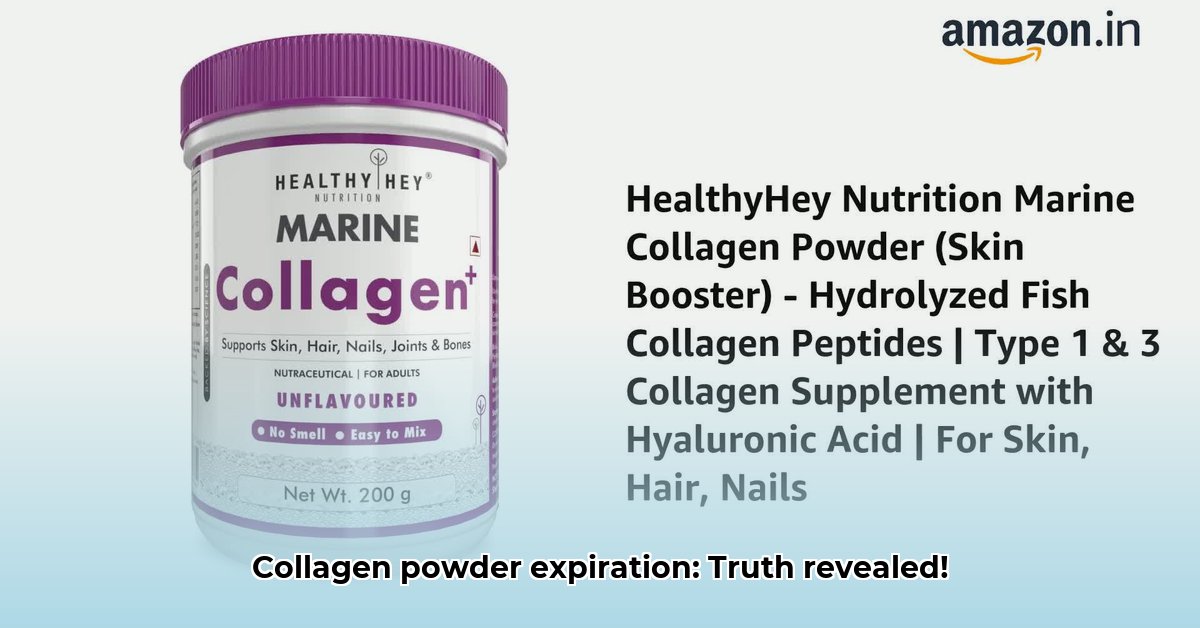
Let's face it: that tub of collagen powder in your pantry probably has an expiration date. But does it really expire? And if so, what are the risks? This article cuts through the confusion, providing practical advice on how to maximize the lifespan of your collagen and avoid wasting money. We'll cover everything from identifying spoilage signs to smart storage strategies, empowering you to confidently use your collagen supplements.
What Happens to Collagen After its Best-By Date?
Collagen is a protein, and like all proteins, it breaks down over time. Think of it like this: fresh bread is soft and delicious, but after a few days, it becomes stale and loses its appeal. Similarly, the amino acids (the building blocks of collagen) begin to degrade, reducing the supplement's effectiveness. While not necessarily toxic, the benefits diminish significantly. You're essentially paying for a less potent product.
Spotting Spoiled Collagen: Your Senses Are Your Best Allies
Don't rely solely on the expiration date. Your senses are your most reliable indicators of spoilage. Look for these signs:
- Visual Changes: Has the color changed? Is it darker, yellowed, or discolored? Are there clumps or an unusual texture? Spoiled collagen may exhibit these visual cues.
- Textural Changes: Is the powder rock-hard, unusually grainy, or gummy? Changes in texture are significant indicators of degradation.
- Olfactory Changes: Does it have a musty, sour, or rancid odor? An off-putting smell is a strong warning sign.
- Taste Changes: If you notice a bitter, sour, or unpleasant taste when added to food or drinks, it’s best to discard it.
If you notice any of these signs, discard the product immediately.
Is Eating Expired Collagen Dangerous?
While unlikely to cause serious harm, consuming expired collagen is highly improbable to deliver the advertised benefits. The main risk isn't toxicity, but rather wasted resources and unfulfilled expectations. Because standardized post-expiration testing isn't universally available for collagen, determining precise safety limits is difficult. It's safest to prioritize freshness.
How to Store Collagen Properly: A Few Simple Rules
Proper storage is essential for preserving collagen's quality and extending its lifespan. Here's how:
- Airtight Container: Use a tightly sealed, opaque container to protect the powder from air, moisture, and light.
- Cool, Dark, Dry Place: Store in a cool, dark, and dry location away from heat sources and direct sunlight. A pantry or cupboard is ideal.
How Long Does Collagen Powder Typically Last?
Most manufacturers suggest a shelf life of 1 to 2 years from the manufacturing date. However, this is an estimate. Proper storage significantly impacts longevity, and sensory checks are crucial. Always prioritize your senses over the expiration date.
What to Do With Expired Collagen
- Careful Inspection: Examine the collagen. Look for changes in appearance, texture, or smell.
- Discard Spoiled Product: Dispose of any product exhibiting signs of spoilage responsibly.
- Exercise Judgment: If it looks and smells acceptable, and storage was optimal, you might still use it—but always prioritize your health and safety.
Buying and Using Collagen Wisely
To minimize waste:
- Buy in Smaller Quantities: Purchase smaller amounts to ensure you use it before it loses significant potency.
- First-In, First-Out (FIFO): Rotate your supplements, using older containers first. This helps prevent products from expiring unused.
Conclusion: Prioritize Freshness
Collagen's expiration isn't a black-and-white issue. It's about responsible storage and leveraging your senses to determine its condition. Prioritize proper storage, conduct regular sensory checks, and purchase only what you need to get full benefit from your collagen.